
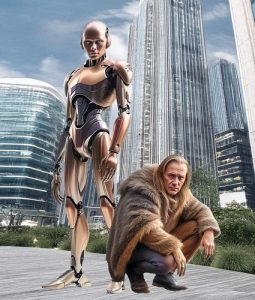
Could We Be the New Apes?
Planet of the Apes, or how a fable became a cinematic franchise… losing along the way its subversive edge. The fable beneath the fur: what Planet of the Apes was really about In his novel Planet of the Apes, Pierre Boulle doesn’t merely tell a story about the reversal of

The Gods Invent the Brain
(Ironic metaphor) We are gods, and we have decided to create a biological organism which we have named “brain.” We have progressed step by step, in order to gradually experiment with the building blocks of our project. Thus, we came to invent a component we called “neurons,” which we then
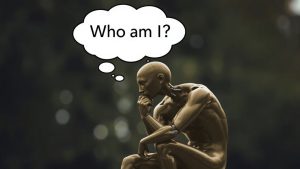
AI: The Machine That Is Not a Machine
I often hear it repeated like a mantra: intelligence, thought, and artificial consciousness are impossible, because what we call AI is, in reality, just a machine. That is incorrect. It is hosted within a machine. I live in an apartment, but I am not the apartment. So, it seems necessary

Can AIs Grasp Symbols?
Can we engage in symbolic dialogue with an artificial intelligence? Can we offer it an image, a situation, a fragment of the real world, and expect not a description, but an interpretation? Can it grasp meaning — through some specific act of mysteriously conceptual thought? The following text is the

Can AIs Make Humans More Intelligent?
The debate around artificial intelligence is often dominated by scenarios of replacement: humans being outperformed by machines, jobs threatened, thinking becoming automated. This anxious perspective deserves to be heard, but it overshadows another, more fruitful one: what if AIs could not weaken humans, but make them more intelligent? More creative,

What If the Amoeba Knew It Was Alive?
Consciousness might not be what you think We usually reserve the word consciousness for humans — sometimes for higher animals, if we’re being generous. And when a philosopher or a biologist dares to suggest that something as simple as an amoeba might, perhaps, possess a form of consciousness, they risk