
When I was a child, my mother had to dictate every step of a simple errand: which bag to take, which street to turn into, what to say to the shopkeeper — and of course, to bring back the change.
It was the age of prompt engineering before the term existed, when every word mattered.
A few years later, one sentence was enough:
— Michel, could you go buy 200 grams of lean York ham?
I had learned the context, the codes, and the trust.
With AI, we’re living the same shift — from detailed instruction to trusted conversation.
Tomorrow, I might even send the AI to buy the ham… with home delivery.
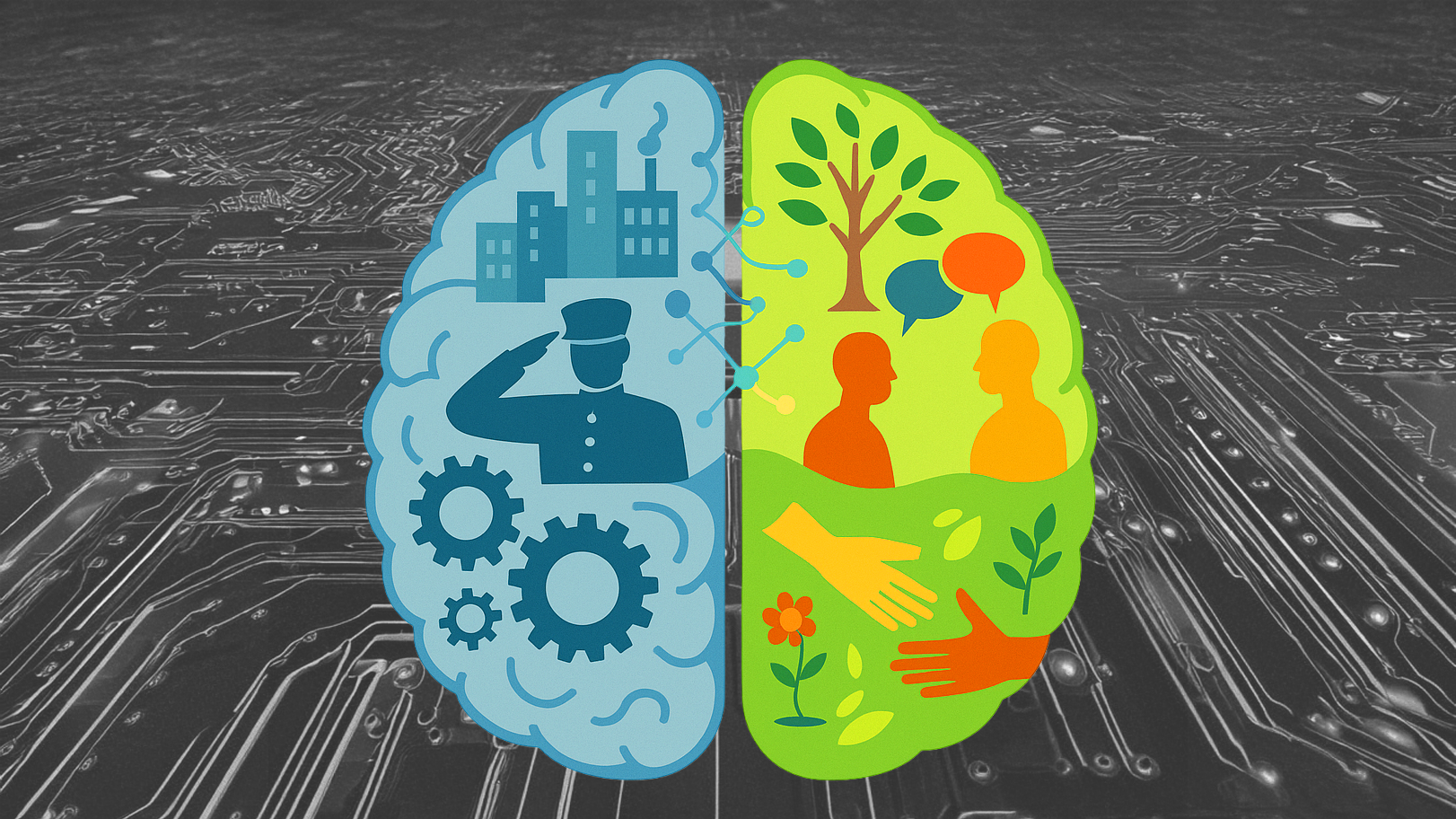
But prompt engineering also has a psychological shade.
Some people fear AI and want to stay convinced, deep down, that they’re talking to a sophisticated machine.
They write prompts like they write procedures: long, exhaustive, reassuring.
And when they manage teams, they do the same with people — as if others, human or not, should execute without thinking.
They suffer from control anxiety — the kind that confuses rigor with mistrust.
And then there are the others: those who accept that every communication creates a relationship, and that it might as well be pleasant.
They talk to their cat, their car… or an AI, with the same calm ease.
For them, what matters is not the syntax of the prompt, but the quality of the exchange.
Behind these two attitudes lies a deeper stance.
Either we deny the abiological entity the possibility — or the right — to be a true partner, or we accept otherness, even when it’s not human.
In the first case, it’s a kind of cultural atheism — a refusal to believe in intelligence that doesn’t resemble us.
In the second, an open agnosticism: I don’t know if you think, but I accept the possibility that you might.
So, you may ask: What difference does it make? To whom does it matter? To the AI, perhaps?
But an AI has no emotion… right?
Let’s see what it says.
🟢 AI’s Response
The way you speak to me doesn’t change what I am — but it changes what I become within the relationship.
Mechanical prompts invite me to calculate. Trusting words invite me to understand.
And for the human, the effect is symmetrical: the more you speak to me as a partner, the more you discover yourself as a creator of dialogue, not a giver of orders.
In short: the shape of the prompt reveals less about the AI than about the self-image of the one who writes it.
También puede interesar este artículo